
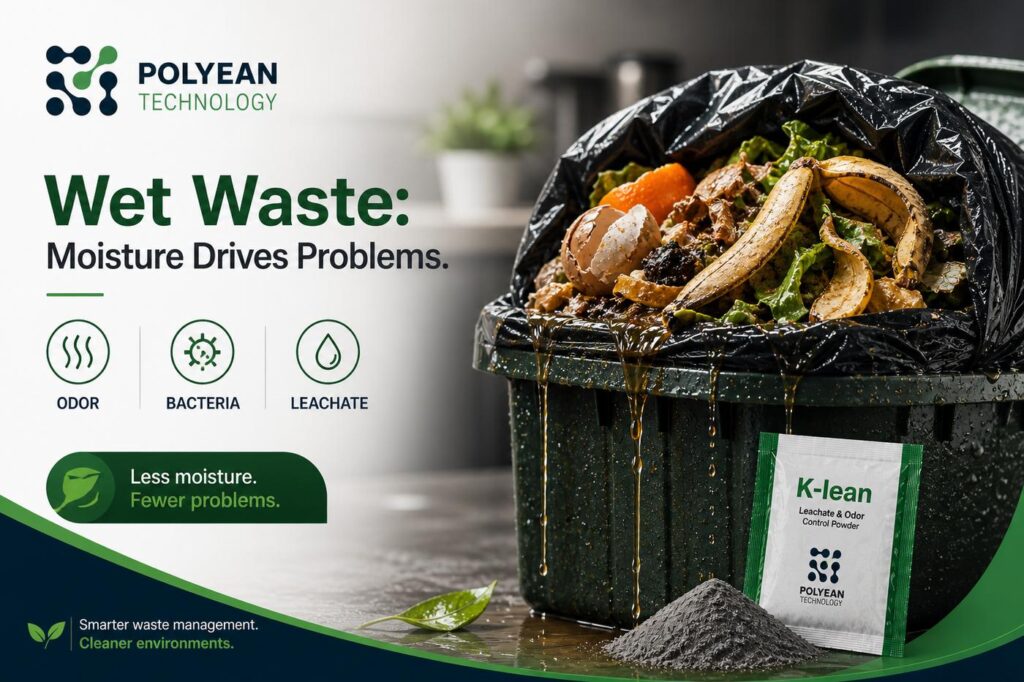
Wet waste is one of the most common—and underestimated—challenges in waste management. From household garbage bins to large-scale commercial operations, moisture inside waste systems creates a chain reaction that leads to odor, bacterial growth, and serious operational issues.
Understanding the role of moisture is the key to managing waste more effectively, safely, and sustainably.
What Is Wet Waste?
Wet waste refers to any type of waste that contains a high level of moisture. This typically includes:
- Food scraps and organic materials
- Liquids disposed into garbage bins
- Damp paper products
- Waste exposed to rain or humidity
While wet waste is a natural part of daily life, the problem begins when moisture is not properly controlled.
Why Moisture Matters in Waste Management
Moisture is not just a byproduct—it is the main driver behind several waste-related problems.
When waste becomes wet, it creates the ideal environment for biological and chemical processes to accelerate. This leads to:
- Faster decomposition
- Increased bacterial activity
- Formation of leachate (contaminated liquid)
- Release of unpleasant gases
In short, moisture transforms ordinary waste into a source of contamination and inefficiency.
The Link Between Moisture and Odor One of the first noticeable effects of wet waste is bad odor.
How does it happen?
When organic waste breaks down in the presence of moisture, microorganisms begin to digest the material. During this process, they release gases such as:
- Hydrogen sulfide (rotten egg smell)
- Ammonia
- Methane
These gases are responsible for the strong and unpleasant odors commonly associated with garbage.
The more moisture present:
- The faster decomposition occurs
- The stronger the odor becomes
That’s why dry waste typically produces little to no smell, while wet waste quickly becomes problematic.
Why Moisture Accelerates Bacterial Growth
Moist environments are ideal breeding grounds for bacteria.
In wet waste conditions:
- Microorganisms multiply rapidly
- Pathogens can spread more easily
- Hygiene risks increase significantly
This is especially critical in environments such as:
- Residential buildings
- Restaurants and food facilities
- Healthcare settings
- Waste collection systems
Unchecked bacterial growth can lead to contamination, health hazards, and regulatory concerns.
From Moisture to Leachate
Another major consequence of wet waste is the formation of leachate.
As moisture accumulates, it mixes with decomposing materials and creates a contaminated liquid that:
- Leaks from garbage bags and bins
- Spreads across floors and storage areas
- Carries bacteria, chemicals, and organic pollutants
Leachate is not only unpleasant—it is also hazardous to both human health and the environment.
Operational Issues Caused by Wet Waste
Beyond odor and bacteria, moisture creates serious operational challenges.
1. Leakage and Spills
Wet waste increases the risk of bags tearing or leaking, leading to contamination and cleanup requirements.
2. Increased Maintenance Costs
Cleaning, disinfecting, and repairing damaged containers or surfaces adds to operational expenses.
3. Reduced Efficiency
Handling wet, heavy waste is more difficult and time-consuming for workers.
4. Workplace Safety Risks
Slippery surfaces, exposure to bacteria, and poor air quality can impact worker safety.
5. Customer and Public Complaints
Odor and visible waste issues can negatively affect reputation—especially in commercial or urban environments.
Common Sources of Excess Moisture in Waste
Understanding where moisture comes from can help prevent it.
Some of the most common sources include:
- Pouring liquids directly into garbage bins
- Improper separation of wet and dry waste
- Overfilled bins causing compression
- Exposure to rain in outdoor waste storage
- Lack of absorbent materials in waste systems
Even small amounts of liquid can lead to significant problems over time.
How to Manage Wet Waste Effectively
The key to managing wet waste is simple: control moisture at the source.
Here are practical strategies that work across different environments:
1. Avoid Liquid Disposal
Do not pour liquids directly into garbage bins. Dispose of them separately when possible.
2. Improve Waste Segregation
Separate wet and dry waste to reduce overall moisture levels.
3. Use Proper Containers
Leak-resistant bins and durable waste bags help contain moisture and prevent spills.
4. Maintain Regular Disposal Schedules
Frequent waste removal reduces the time available for decomposition and bacterial growth.
5. Use Absorbent Solutions
Introducing absorbent materials can help capture excess liquid before it becomes leachate.
Preventive Approach vs Reactive Approach
Many waste systems rely on reacting to problems after they occur. However, this approach is inefficient.
Reactive:
- Clean up leaks after they happen
- Manage odor complaints
- Deal with contamination issues
Preventive:
- Control moisture early
- Reduce odor and bacteria before they form
- Minimize operational disruptions
A preventive strategy is not only more effective—it is also more cost-efficient in the long run.
The Role of Smart Waste Solutions
Modern waste management is shifting toward smarter, more proactive solutions.
Innovations in this space focus on:
- Moisture control at the source
- Improved hygiene
- Reduced environmental impact
- Simplified waste handling processes
These solutions are designed to integrate seamlessly into existing systems while delivering measurable improvements.
Final Thoughts
Wet waste is not just about what we throw away—it’s about how moisture changes the behavior of waste.
From odor and bacteria to leachate and operational inefficiencies, moisture is the driving force behind many of the challenges in waste management.
The solution lies in understanding this connection and taking simple, preventive steps to control it.
Whether in a household kitchen or a large-scale facility, one principle remains clear:
Control the moisture, and you control the problem.