
Wet waste may seem like a routine part of everyday garbage, but the costs associated with it often go unnoticed.
Food scraps, leftover liquids, and other moisture-rich waste can create leaks, persistent odors, additional cleaning, and maintenance problems. For households, these issues are inconvenient. For businesses and facilities handling larger volumes of waste, they can become recurring operational costs.
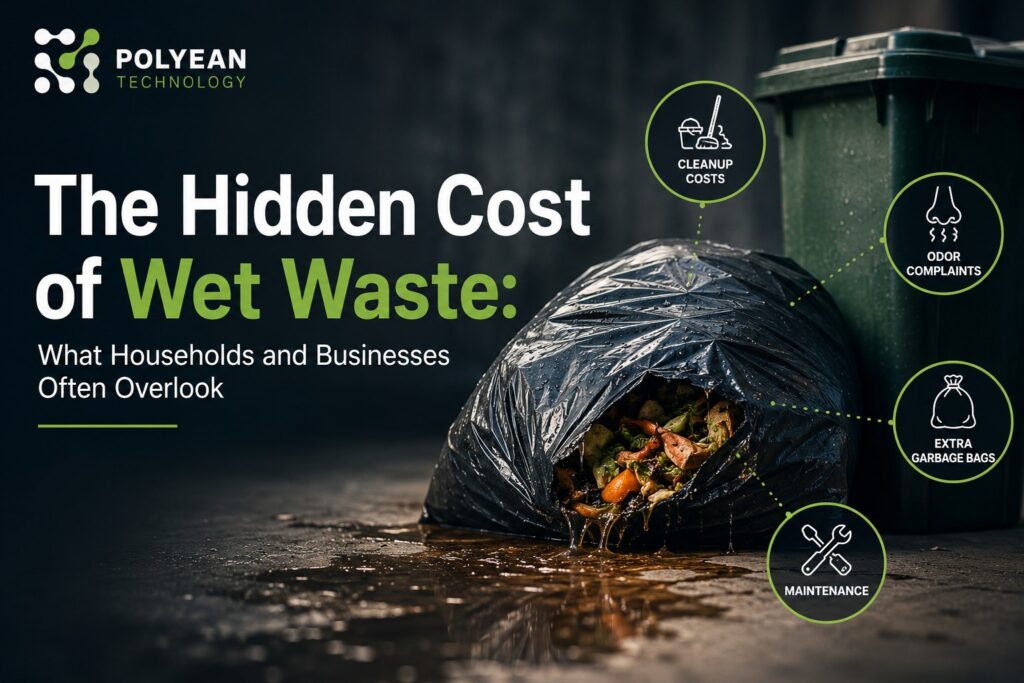
1. More Cleaning Than You Think
When liquid accumulates inside a garbage bag, even a small tear can allow contaminated liquid—or leachate—to escape.
The result may include dirty floors, stained waste areas, contaminated bins, and additional cleaning requirements.
At home, that means more time spent washing and disinfecting. In restaurants, offices, residential buildings, and commercial facilities, it can mean additional labor, cleaning supplies, and sanitation procedures.
2. Odor Becomes an Ongoing Problem
Wet organic waste creates favorable conditions for microbial activity and decomposition. As this process accelerates, unpleasant odors become increasingly difficult to manage.
For households, persistent garbage odor can affect kitchens, garages, and other living spaces.
For businesses, the consequences can be more significant. Odor around waste storage areas may lead to complaints from customers, residents, employees, or neighboring properties.
Masking the smell may provide temporary relief, but controlling moisture addresses one of the conditions that allows odor problems to develop.
3. Extra Garbage Bags Add Up
One common response to leaking waste is double-bagging.
Adding a second garbage bag may help contain a leak, but it also increases plastic consumption and creates a recurring expense.
A single additional bag might seem insignificant. Multiply that by hundreds or thousands of waste bags used across a restaurant, condominium, healthcare facility, or other commercial operation, and the impact becomes much more noticeable.
4. Maintenance Is Another Hidden Expense
Leaking waste doesn’t only create a mess.
Repeated exposure to moisture and contaminated liquids can increase cleaning and maintenance demands for waste bins, floors, storage areas, carts, and other waste-handling equipment.
Preventing leaks can therefore be more efficient than repeatedly dealing with their consequences.
Prevention Starts With Moisture Control
Better wet waste management doesn’t necessarily require a more complicated waste system.
Simple practices can help:
- Keep unnecessary liquids out of garbage bins.
- Avoid overfilling waste bags.
- Empty wet waste regularly.
- Keep waste containers clean and dry.
- Use appropriate absorbent solutions where excess moisture is unavoidable.
The goal is straightforward: manage moisture before it turns into leakage, odor, and additional work.
Final Thoughts
The true cost of wet waste isn’t limited to disposal.
It can also appear in cleaning time, odor complaints, additional garbage bags, sanitation requirements, and ongoing maintenance.
For both households and businesses, preventing these problems at the source can make waste management cleaner, simpler, and more efficient.
Sometimes, the biggest opportunities for better waste management are hidden at the bottom of the bin.