
Have you ever wondered why your garbage bin starts to smell—even when it’s only been sitting there for a day or two?
The answer lies in biology.
Have you ever wondered why your garbage bin starts to smell—even when it’s only been sitting there for a day or two?
Why Garbage Smells: The Biology of Odor Formation in Waste.
Garbage odor isn’t just an unpleasant inconvenience. It’s a natural result of microorganisms breaking down organic waste, and understanding how it happens is the first step toward better waste hygiene.
What Causes Garbage Odor?
Most household waste contains organic materials such as food scraps, fruit peels, coffee grounds, and leftovers. Once these materials are exposed to moisture and warmth, bacteria begin to feed on them.
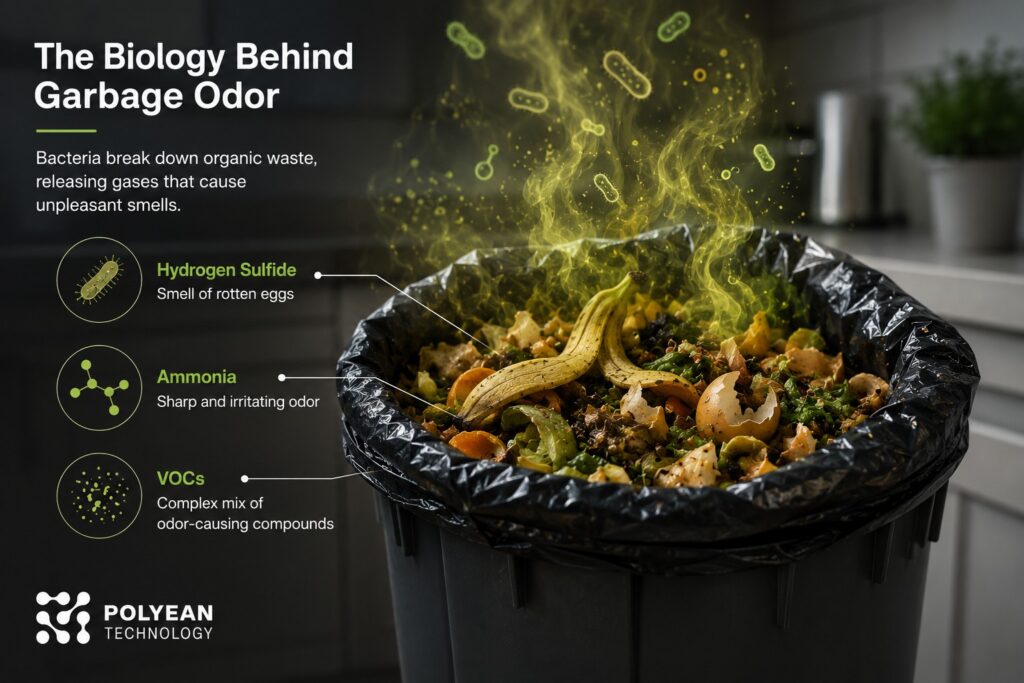
As microorganisms digest organic matter, they release gases as byproducts of decomposition. These gases are what we recognize as the familiar “garbage smell.”
The process happens faster than many people realize—especially during warmer months or when waste contains excess moisture.
The Main Culprits Behind Waste Smell
Several gases contribute to unpleasant waste odors:
Hydrogen Sulfide
Often described as the smell of rotten eggs, hydrogen sulfide is produced when sulfur-containing organic materials decompose.
Ammonia
Released during the breakdown of proteins and nitrogen-rich waste, ammonia has a sharp and irritating odor.
Volatile Organic Compounds (VOCs)
Organic waste can generate a mixture of compounds that create the complex smells associated with garbage.
The more moisture and time involved, the stronger these odors become.
Why Moisture Makes It Worse
Moisture is one of the biggest drivers of odor formation.
Wet waste creates ideal conditions for bacteria to multiply rapidly. Increased microbial activity means faster decomposition—and more odor-producing gases.
This is why leaking garbage bags, food residue, and liquid accumulation often lead to stronger and more persistent smells.
How to Reduce Garbage Odor
Fortunately, preventing waste odor doesn’t have to be complicated.
A few simple habits can make a significant difference:
- Avoid pouring liquids directly into garbage bins.
- Dispose of food waste regularly.
- Keep waste containers clean and dry.
- Use durable, leak-resistant garbage bags.
- Control moisture before decomposition accelerates.
The key is to address the root cause—not just mask the smell.
Final Thoughts
Garbage odor is not simply a nuisance; it’s a sign of active decomposition happening inside your waste.
By understanding the biology behind waste smell, households and facilities can take preventive steps to improve hygiene, reduce unpleasant odors, and create cleaner living environments.
When it comes to waste management, controlling moisture means controlling odor.